
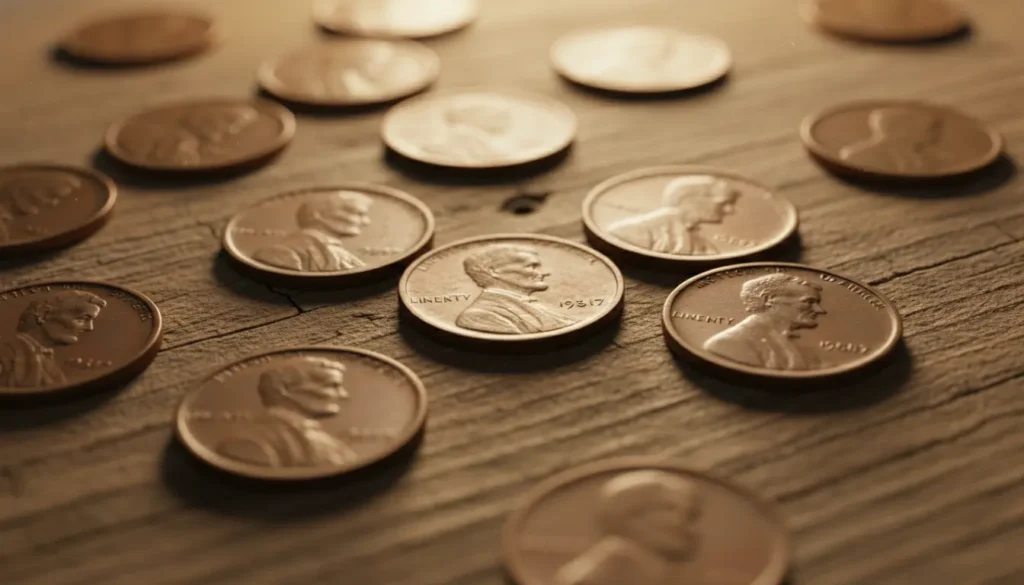
Understanding Lincoln Wheat Pennies and Their Value
Lincoln Wheat pennies were struck from 1909 to 1958 and remain one of the most collected U.S. coin series. Value depends on year, mintmark, condition, and errors.
This guide walks you through key dates, how to inspect coins, and practical hunting strategies to unlock worth year by year.
How Date and Mintmark Affect Lincoln Wheat Penny Value
The date and mintmark (no mark for Philadelphia, D for Denver, S for San Francisco) are the first things to check. Small differences, like a missing mintmark or doubled die, can dramatically raise value.
Use a 10x loupe and good light. Look for:
- Clear date and mintmark placement
- Doubling on letters or numerals
- Unusual metal color or weight (indicates errors)
Top Key Dates and Error Coins to Watch
Some years and errors consistently command higher prices. Learn the most important ones so you can spot them quickly.
- 1909-S VDB — One of the rarest wheat cents in circulated grades.
- 1909 (VDB) and 1909-S — Early issues with designer initials VDB (on reverse) are important.
- 1914-D — A scarce Denver issue that is valuable even in lower grades.
- 1922 (No D) — Known for weak and missing mintmarks on some pieces; scarce in higher grades.
- 1931-S — A semi-key date at San Francisco with strong collector interest.
- 1943 Bronze — Most 1943 cents are steel; bronze 1943 errors are extremely rare and valuable.
- 1955 Doubled Die Obverse — A famous and attractive variety with bold doubling on date and inscriptions.
Year-by-Year Hunting Tips
Approach hunting by grouping years into three ranges: early (1909–1929), middle (1930–1949), and late (1950–1958). Each range has its own common issues and typical values.
Early Years (1909–1929)
These years hold many of the classic keys and varieties. Look for the VDB initials and small mintmarks. Condition matters more here because surviving high-grade examples are scarce.
Middle Years (1930–1949)
This period includes wartime metal changes. Inspect 1943 coins carefully for bronze or copper instead of steel, and check adjacent years for irregularities in color and weight.
Late Years (1950–1958)
Late wheat cents are common in circulated grades but include the popular 1955 doubled die. Higher-grade examples and mint state coins still carry premiums.
Practical Grading Basics for Lincoln Wheat Pennies
Understanding basic grades helps determine worth. Grading ranges from Good (G) to Mint State (MS), and small details affect value.
- Good (G) — Major details worn flat; date usually readable.
- Fine (F) — Major design visible but worn; light details missing.
- Extremely Fine (EF/XF) — Light wear; most details intact.
- About Uncirculated (AU) — Slight trace wear on high spots.
- Mint State (MS60–MS70) — No wear; luster and strike quality vary.
For accurate pricing, compare to current price guides and auction results for the specific grade.
Where to Hunt Lincoln Wheat Pennies
Common hunting grounds include pocket change, coin rolls, bank boxes, flea markets, and online auctions. Each source requires a slightly different approach.
- Roll hunting: Use a coin roller machine at a bank or roll your own for quick inspection.
- Box hunting: Buy unsearched mint rolls or bank boxes; sift for dates and colors that stand out.
- Change hunting: Carry a small magnifier and check dates at the point of purchase.
- Online marketplaces: Carefully read photos and ask for close-ups of dates and mintmarks.
Case Study: Finding a 1955 Doubled Die in a Bank Box
A collector bought a sealed box of mixed cents from a local bank and spent an afternoon inspecting each roll. Within two hours they found a well-struck 1955 doubled die obverse in EF grade.
After verification by a local coin dealer and a third-party grader, the coin sold at auction for several times the face value of the box, covering the box cost and yielding a profit.
Some 1943 pennies are bronze because planchets meant for 1942 were left in the press. These error coins can be worth tens or hundreds of thousands of dollars in verified condition.
Authentication and When to Seek Professional Grading
If you find a potential key date or error, avoid cleaning or altering the coin. Scratches and solvents reduce value.
Seek third-party grading (PCGS, NGC) for high-value finds or unusual errors. Authentication adds trust and typically increases resale value.
Quick Value-Boosting Checklist Before Selling
- Confirm date and mintmark under magnification.
- Photograph obverse and reverse in good light.
- Check for doubling, wrong metal, or mintmark anomalies.
- Get a professional opinion for potential high-value coins.
Final Practical Advice for Lincoln Wheat Penny Hunters
Start with the key dates and learn to spot common errors. Keep coins uncleaned and store them properly. A modest investment in a loupe, scale, and reference guide pays off quickly.
Stay patient and methodical—many valuable finds come from routine searches and steadily improved skills.