
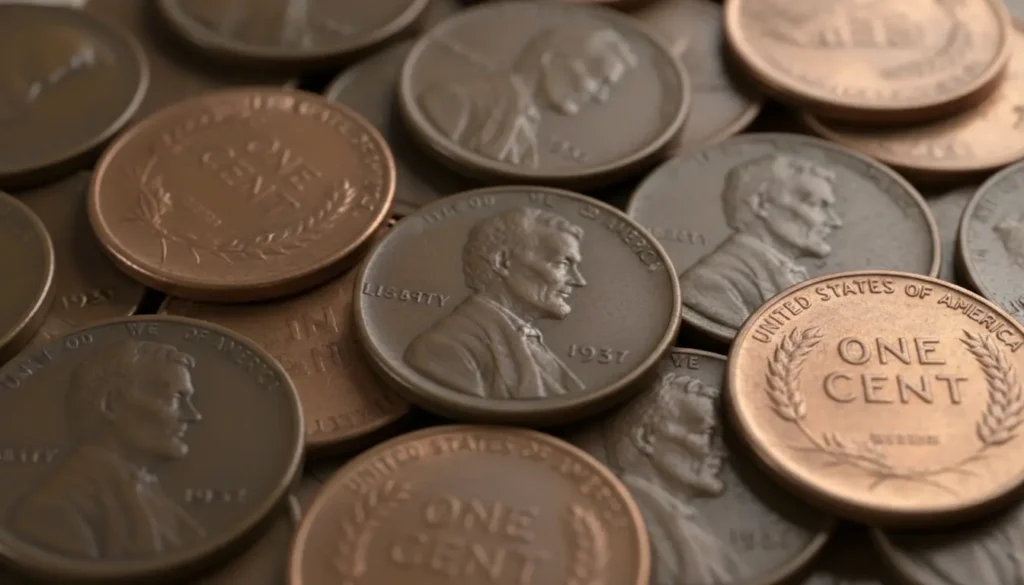
Why Lincoln Wheat Pennies by Year Matter in 2025
Lincoln Wheat pennies (1909–1958) remain a cornerstone for collectors because many dates and errors carry hidden value. Knowing which years and varieties to watch can turn a common coin into a worthwhile find.
This guide focuses on key years, identification tips, and practical collecting strategies for 2025.
Top Lincoln Wheat Pennies by Year to Know
Not every Wheat cent is rare, but certain years and mintmarks are consistently in demand. Below are the most sought-after dates and why they matter.
1909 (VDB and S)
The 1909 VDB and 1909-S VDB are foundational rarities. Early issues with Victor David Brenner’s initials (VDB) on the reverse and low mintages at the San Francisco mint make these coins valuable in higher grades.
Key points:
- 1909-S VDB: scarce in any grade
- 1909-S (without VDB) and 1909-S full coin are also collectible
1914-D
The 1914-D is a classic key date because Denver produced fewer coins that year. Even circulated examples typically command strong premiums.
1922 No D
The 1922 without a visible D mintmark is a popular variety. Many were cleaned or struck weakly, so well-preserved examples are valuable.
1931-S
The 1931-S has low mintage and is scarce in higher grades. Look for sharp details on Lincoln’s hair and wheat stalks to assess condition.
1943 and 1944 Errors (Copper/Bronze and Steel)
During WWII the mint made steel cents in 1943 and returned to bronze in 1944. Surviving 1943 bronze or 1944 steel cents are rare error pieces and can be worth many thousands to collectors.
1955 Doubled Die
The 1955 doubled die obverse is one of the most famous Lincoln cent errors. It shows prominent doubling on the date and inscriptions and is highly collectible.
How to Identify Valuable Lincoln Wheat Pennies by Year
Identification combines date, mintmark, variety, and condition. Use a loupe and checklist to evaluate any candidate coin.
- Inspect the date and mintmark carefully for weak strikes or repunched mintmarks.
- Check for designer initials (VDB) on 1909 coins.
- Look for errors: doubled die, repunched mintmarks, wrong planchet metal.
- Compare wear on high points: cheek, jawline, and wheat stalk tips.
Grading Basics
Grades range from Good (G) to Mint State (MS). Even a small jump in grade can multiply value, so learn basic grade indicators or consult a grader.
Where to Find Hidden Value in 2025
Sources for discoveries have expanded beyond coin shops. Successful hunters use multiple channels and stay patient.
- Roll hunting: bank rolls and estate collections still yield finds.
- Online auctions: eBay and specialized auction houses often list rare wheat cents.
- Estate sales and flea markets: these can include overlooked collections.
- Local coin shows: good for hands-on inspection and bargaining.
Smart Collecting Tips for Lincoln Wheat Pennies by Year
Follow a practical approach to build value without overpaying. These steps help control costs and improve your collection quality.
- Buy certified coins for key dates once the price warrants it. Third-party grading removes major authenticity concerns.
- Focus on problem-free examples: avoid cleaned or heavily scratched coins.
- Collect one grade level at a time—build up AU to MS examples later.
- Keep a reference guide or price tool updated for 2025 market shifts.
Pricing Reality Check in 2025
Values change with market demand and certification trends. Use price ranges rather than exact numbers, and verify recent auction results for the most accurate picture.
Examples of typical ranges (approximate and illustrative):
- 1909-S VDB: hundreds to several thousand dollars depending on grade.
- 1914-D: typically hundreds to low thousands for nicer examples.
- 1955 Doubled Die: premium mid-hundreds to thousands for strong doubling.
- 1943 bronze or 1944 steel error: high five- to six-figure territory for authenticated pieces.
Case Study: A Real-World Find
In 2023 a collector bought an estate lot of common Wheat cents for $30. Among the lot was a worn 1922 no D that the buyer noticed while sorting at home.
After grading and authentication, the 1922 no D sold at auction in 2024 for several thousand dollars, turning a small investment into significant profit.
This illustrates how careful inspection and knowledge of year-by-year rarities can pay off.
The Lincoln Wheat reverse design was used from 1909 to 1958 and makes identifying mint errors easier because the reverse details are consistent across years.
Quick Checklist: Buying Lincoln Wheat Pennies by Year
- Confirm date and mintmark under magnification.
- Look for known varieties (VDB, doubled die, no D).
- Assess wear on key high points for grade estimate.
- Request provenance and certification for high-value coins.
- Compare recent auction prices before buying or selling.
Final Advice for 2025 Collectors
Stay methodical and patient. Building knowledge about Lincoln Wheat pennies by year is your best asset.
Use resources such as up-to-date price guides, online auction archives, and local experts to validate finds. Small investments in learning and grading can yield disproportionately large returns over time.