
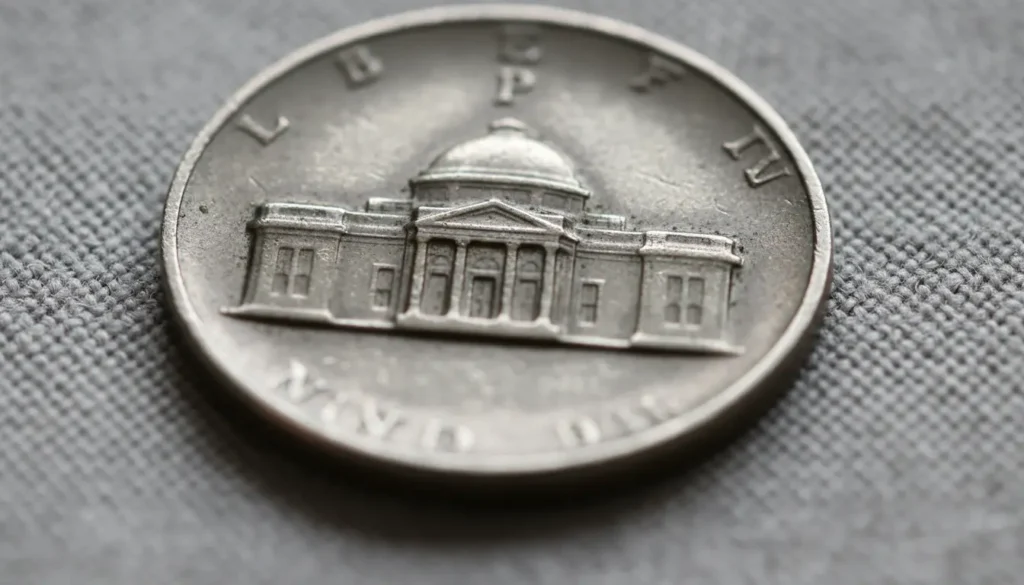
Why the War-Era Jefferson Nickel Stands Out
The Jefferson nickel minted during World War II (1942–1945) is different from other nickels. The Mint changed its metal mix and moved the mint mark, creating a distinct series collectors seek.
That change is the foundation for why some war-era Jefferson nickels have become highly valuable. Rarity, condition, silver content, and notable errors all add to market interest.
What Changed During the War
In 1942 the United States redirected nickel for wartime production. The Mint responded by altering the nickel’s composition. From mid‑1942 through 1945, Jefferson nickels were struck with a 35% silver alloy.
The new composition was 56% copper, 35% silver, and 9% manganese. This is why collectors call them “war nickels.” The silver content makes them different from regular nickels and gives them intrinsic metal value.
Mint Mark Placement and Why It Matters
Another notable change was the relocation of the mint mark. To protect dies and reduce handling, mint marks were moved to the reverse above Monticello during the war years.
This unique placement helps you identify war-era Jefferson nickels at a glance. Collectors prize specimens with clear mint marks and strong device details.
Key Factors That Make a War-Era Jefferson Nickel Valuable
Not every war nickel is rare, but several factors drive value. Understanding these variables helps you spot coins with collector appeal.
- Silver content: The 35% silver mix gives war nickels intrinsic metal value.
- Condition (grade): High-grade examples with original luster command premiums.
- Strike quality and Full Steps: Sharp details on Monticello steps indicate minimal wear.
- Mint errors and varieties: Doubled dies, repunched mint marks, and unusual strikes increase demand.
- Low mintage issues: Some dates and mint combinations had lower production and are scarcer.
How to Check a War-Era Jefferson Nickel
Use these practical checks before assuming value. They are simple and safe for beginners.
- Confirm the date range: 1942, 1943, 1944, or 1945 with mint mark above Monticello.
- Look for the mint mark on the reverse above Monticello (P, D, or S).
- Examine the Monticello steps for Full Steps (sharp horizontal lines).
- Check weight (about 5.0 g) and appearance; the silver alloy gives a slightly different tone.
- If you suspect an error or high grade, consider professional grading.
From 1942 to 1945 Jefferson nickels contained 35% silver. The mint mark was placed above Monticello on the reverse during these years to save metal and reduce die wear.
Common Valuable Varieties and Errors
Collectors watch for a few specific varieties and mint errors that can elevate value. Some are subtle and require magnification or grading to confirm.
- Doubled die obverse or reverse — visible doubling on letters or design elements.
- Repunched mint marks — secondary impressions near the mint mark.
- Off‑center strikes or broadstrikes — partial designs or shifted images.
- High‑grade survivors — coins with original luster and minimal wear.
Why Professional Grading Helps
Professional grading assigns a numeric score to condition and authenticates errors. Graded pieces are easier to buy, sell, and insure.
High-grade war nickels with certified grades often sell at auction and can bring much higher prices than raw, ungraded pieces.
Case Study: How Condition and Rarity Created Value
A practical example helps illustrate the process. A small-town collector inherited a jar of loose coins, including a 1944 Jefferson nickel with the mint mark clearly above Monticello.
The coin looked bright and had strong steps. The collector submitted it to a reputable grading service. The coin received a high grade because it retained original luster and sharp details.
After grading, the coin attracted interest from specialized collectors. At auction it sold well above typical retail values for circulated war nickels, showing how condition and certification create market confidence and value.
Practical Tips for Buyers and Sellers
If you find a war-era Jefferson nickel, follow these practical steps to evaluate it safely and get the best outcome.
- Do a quick visual check for date and mint mark location.
- Compare with photos online of Full Steps and known varieties.
- Avoid aggressive cleaning; cleaning reduces collector value.
- If it appears uncirculated or error-prone, seek professional grading or an expert opinion.
- Use trusted auction houses or reputable dealers when selling high-value pieces.
Final Notes on Collecting War-Era Jefferson Nickels
War-era Jefferson nickels combine historical interest with tangible differences that matter to collectors. The silver content and unique mint mark placement make the series easy to identify and worth studying.
Not every war nickel is exceptionally valuable, but careful inspection, attention to condition, and knowledge of common varieties will help you spot the special ones. For collectors, these coins are a compact piece of wartime history with real numismatic appeal.