
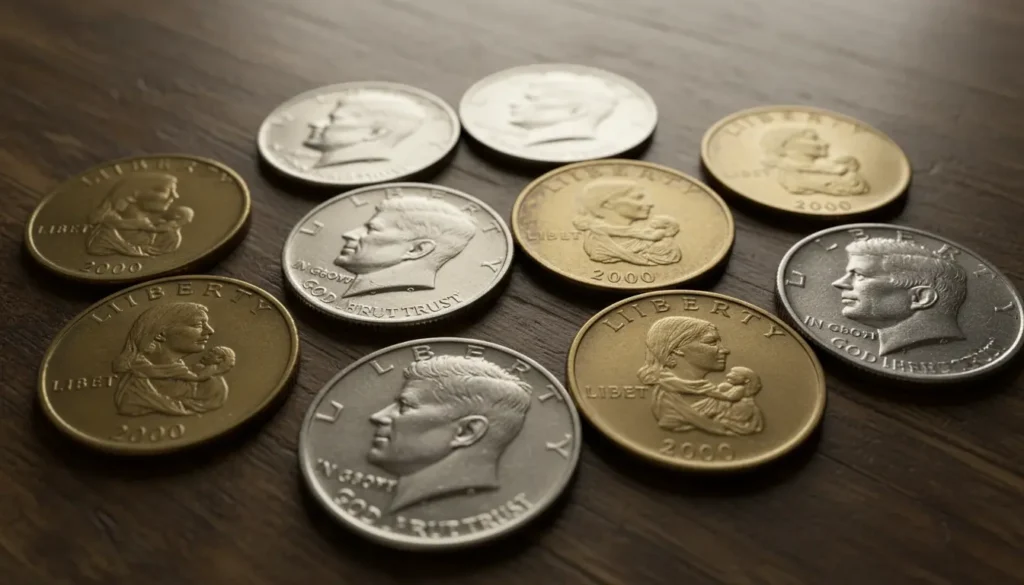
Choosing between a Sacagawea Dollar and a Kennedy Half Dollar depends on what you want from a coin. Are you collecting for fun, investing in metal, or using coins for display or gifts? This practical guide walks you through features, uses, and simple steps to pick the right coin.
Sacagawea Dollar vs Kennedy Half Dollar Quick Comparison
The Sacagawea Dollar and the Kennedy Half Dollar are modern U.S. coins with different roles. The Sacagawea Dollar is a smaller, golden-colored dollar introduced in 2000. The Kennedy Half Dollar, introduced in 1964, is larger and has a long history tied to President John F. Kennedy.
- Face value: Sacagawea = $1, Kennedy = 50 cents.
- Size: Kennedy is noticeably larger and heavier.
- Metal: Modern Sacagawea is a copper core with manganese-brass cladding. Kennedy halves minted before 1971 contain silver.
- Use: Sacagawea often appeals to casual collectors and novelty users; Kennedy appeals to collectors and silver buyers (for older issues).
Key specifications to know
- Sacagawea diameter ~26.5 mm; weight ~8.1 g. Modern composition: manganese-brass, no precious metal.
- Kennedy Half diameter ~30.6 mm; weight ~11.34 g. Silver content: 1964 is 90% silver; 1965–1970 are 40% silver; 1971 onward are copper-nickel clad.
When to choose a Sacagawea Dollar
Pick a Sacagawea Dollar if you want an affordable, modern dollar with a distinctive golden color. It is ideal for beginners, educational uses, and themed displays.
Benefits of choosing Sacagawea:
- Low cost for common, circulated examples—often close to face value.
- Good for teaching coin handling and basic collecting.
- Attractive golden look without silver market volatility.
When to choose a Kennedy Half Dollar
Choose a Kennedy Half Dollar if you are interested in history, collecting varied mint issues, or silver content. Older halves can carry intrinsic metal value and collector interest.
Reasons to pick a Kennedy Half:
- Pre-1971 halves contain silver and may track silver prices.
- Many dates and mint marks attract moderate collector markets.
- Larger size is more impressive for display or gifts.
Collector vs investor considerations
If you collect by date and mint mark, Kennedy halves offer more variety and historical significance. If your goal is small metal investment or inflation hedge, pre-1971 Kennedy halves are more relevant because of silver content.
How to evaluate coin condition and value
Condition is key. Collectors use grades from Good to Mint State; any damage lowers value. For mainstream buying, focus on these points:
- Look for wear patterns and scratches under good light.
- Check the edge and rim for nicks or damage.
- Proofs and uncirculated coins command higher premiums.
Note: Many common Sacagawea Dollars are worth face value unless they are uncirculated, proof, or have recognized errors.
The 1964 Kennedy Half Dollar was minted quickly after President Kennedy’s assassination and contains 90% silver, making it both historically significant and valuable for its metal content.
Practical steps to choose the right coin
- Define your purpose: collecting, investing, gifting, or display.
- Set a budget for purchase and storage (holders, flips, or tubes).
- Decide if metal content matters (choose pre-1971 Kennedy halves for silver).
- Inspect examples in person or ask for high-resolution photos before buying.
- Buy from reputable dealers or marketplaces with clear return policies.
Where to buy
Trusted places include local coin shops, reputable online dealers, and established auction sites. For high-value items, prefer dealers who offer grading reports or third-party certification.
Small real-world example
Case study: A beginner collector named Maria wanted a coin to start a small display shelf. She chose a Sacagawea Dollar because she liked its golden tone and it fit her $10 budget. Two months later she added a 1968 Kennedy Half Dollar to her collection after learning about silver variants. Maria’s choices show how purpose and budget naturally lead to different coins.
Summary comparison and final tips
In short, choose a Sacagawea Dollar for low-cost collecting and visual appeal. Choose a Kennedy Half Dollar for historical interest, variety, and potential silver value (if pre-1971).
Final tips:
- Decide your main goal first—collecting or metal value.
- Inspect coins or buy graded examples for higher-value pieces.
- Store coins properly to avoid damage and preserve value.
If you are unsure, talk to a local coin dealer or join a collector forum to see real examples before buying. A careful choice will bring both enjoyment and long-term value.