
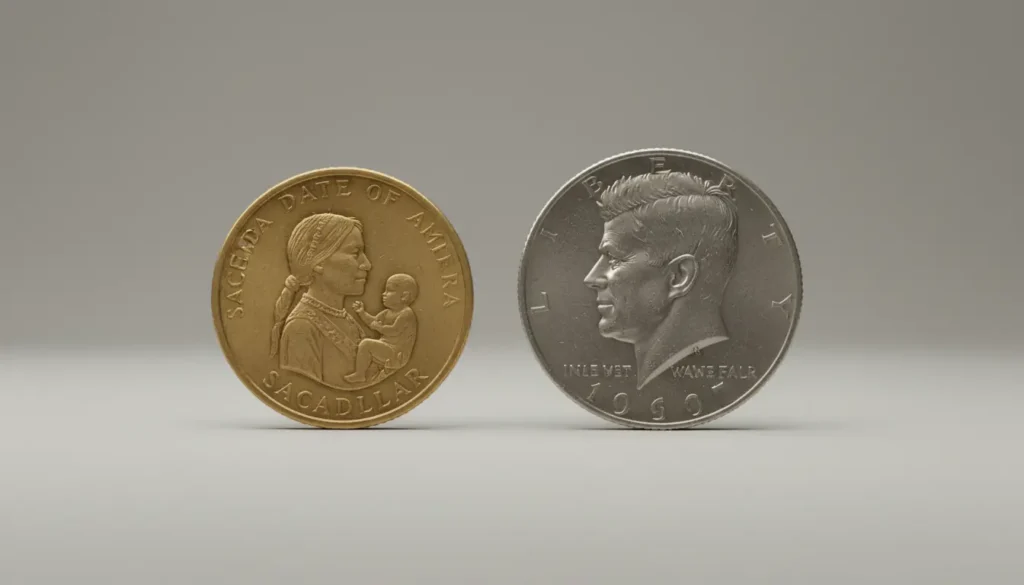
Choosing between a Sacagawea Dollar and a Kennedy Half Dollar depends on your goals, budget, and how you plan to enjoy the coin. This guide walks you through their differences, practical selection criteria, and buying tips so you can decide with confidence.
Sacagawea Dollar Vs Kennedy Half Dollar: Key Differences
Start by comparing the basic facts. Size, metal content, face value, and collector demand shape which coin fits your needs.
- Face value: Sacagawea = $1, Kennedy = $0.50.
- Size and weight: Sacagawea is smaller and lighter; Kennedy is larger and heavier.
- Metal content: Most Sacagawea dollars are manganese-brass; Kennedy halves vary by year and include silver issues (1964, 1965–1970) and clad compositions after 1971.
- Collector interest: Both have collectors, but silver Kennedy halves and certain Sacagawea varieties attract higher premiums.
Sacagawea Dollar: What to Know
The Sacagawea Dollar was introduced in 2000 and is known for its golden color and smooth edge. It is primarily a modern circulating dollar aimed at everyday use and collector sets.
Most common Sacagawea dollars in circulation are worth face value to a few dollars for uncirculated or proof versions. Special varieties, mint errors, or coins in high grade can be worth considerably more.
Kennedy Half Dollar: What to Know
The Kennedy Half Dollar debuted in 1964 and is larger and heavier than the Sacagawea. Early Kennedys are notable for their silver content, which significantly affects value.
1964 Kennedy halves are 90% silver, 1965–1970 halves contain 40% silver, and 1971–present halves are mostly copper-nickel clad. Collector value depends on year, condition, and whether the coin is a proof or special issue.
How to Choose the Right Coin
Decide by answering practical questions about purpose, budget, and handling. Use the checklist below to narrow your choice.
- Purpose: Are you collecting, investing in metal, or buying a display piece?
- Budget: How much will you spend per coin and for storage?
- Storage and display: Do you prefer a compact collection or larger display coins?
- Liquidity: How easily do you need to resell the coin?
- Aesthetic and historic appeal: Which design or era matters more to you?
Choose Sacagawea Dollar If
- You want a low-cost, modern coin that’s easy to store and display.
- You prefer a gold-colored coin with contemporary design appeal.
- You are building a starter collection or buying for educational purposes.
Choose Kennedy Half Dollar If
- You value larger coins with historical connection to the 1960s.
- You want silver content (if you select pre-1971 issues) or more visible detail for display.
- You are willing to pay more for certain years or higher grades.
Practical Steps to Decide and Buy
Follow these actions to make a confident purchase. Each step helps reduce risk and match a coin to your goals.
- Set a clear goal: spending, collecting, or investing in metal content.
- Research current market prices using reputable coin price guides and dealer listings.
- Inspect condition: photos or in-person inspection should show wear, marks, and luster.
- Buy from trusted dealers or auction platforms with clear return policies.
- Consider certified coins for higher-value purchases to ensure grade and authenticity.
Real-World Example: A Small Case Study
Case study: Two beginner collectors—Alex and Priya—approached the choice differently. Alex wanted a compact starter collection to display on a shelf and liked modern designs. He chose five Sacagawea dollars in uncirculated condition because they were affordable and consistent in appearance.
Priya preferred historical coins and wanted some silver exposure. She purchased a circulated 1966 Kennedy half (40% silver) from a local dealer and a proof Kennedy half for display. Priya’s purchase cost more, but her coins offered both historical appeal and metal value.
Outcome: Alex built a neat display and kept costs low. Priya accepted higher initial expense for a collection with silver content and stronger resale potential. Both choices matched their stated goals.
Quick Examples and Buying Tips
- Beginner display: Buy Sacagawea uncirculated rolls or mint sets.
- Silver exposure: Target Kennedy halves from 1964–1970, but confirm exact year and silver percentage before buying.
- Collector grade: Look for certified coins (PCGS, NGC) when spending significant amounts.
- Error varieties: Research known varieties and only buy verified examples from reputable sellers.
Final Recommendations
If you want low cost, modern appeal, and easy storage, the Sacagawea Dollar is a practical choice. If you prefer larger coins with historical depth and possible silver content, the Kennedy Half Dollar may be the better option.
Ultimately, choose based on purpose, budget, and how you plan to enjoy the coin. Start small, buy from trusted sources, and keep learning—numismatics rewards patience and careful decisions.