
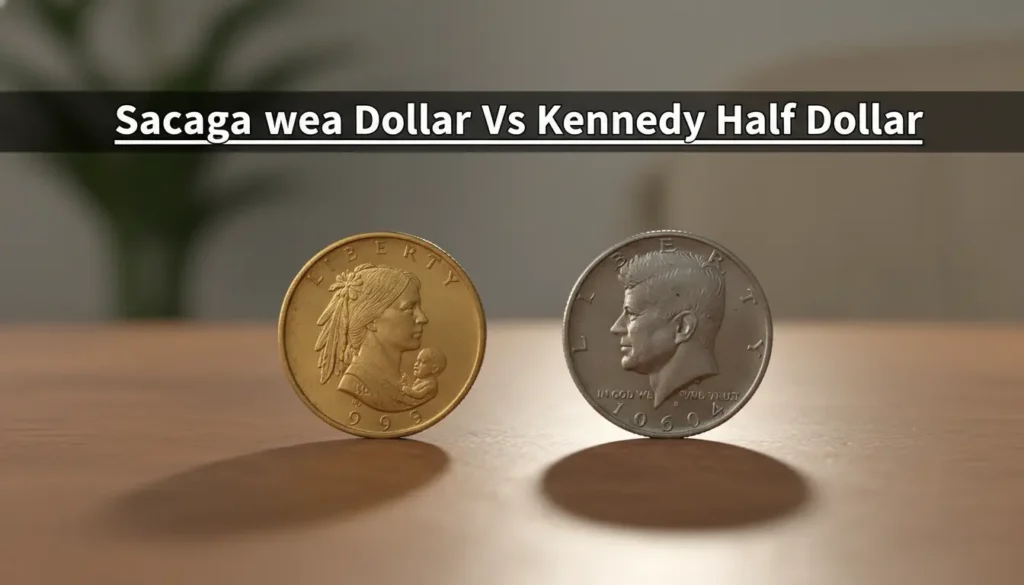
Sacagawea Dollar vs Kennedy Half Dollar: Quick Overview
Choosing between a Sacagawea Dollar and a Kennedy Half Dollar depends on your goals. Are you buying to spend, collect, or invest in metal? Each coin has different composition, size, and market behavior.
Sacagawea Dollar basics
The Sacagawea Dollar was introduced in 2000. It is a golden-colored dollar intended for easy recognition and everyday transactions.
Common features include a manganese-brass outer layer over a copper core, a diameter of about 26.5 mm, and a face value of one dollar. Most Sacagawea Dollars are modern circulation strikes and have limited intrinsic metal value.
Kennedy Half Dollar basics
The Kennedy Half Dollar debuted in 1964 as a tribute to President John F. Kennedy. Its size and heft make it feel more substantial than a dollar coin.
Composition varies by date. 1964 halves are 90% silver. From 1965 to 1970, many halves were 40% silver. After 1971, the standard issue is copper-nickel clad with little intrinsic metal value.
Key differences to consider
Below are practical differences to weigh when choosing between the Sacagawea Dollar and the Kennedy Half Dollar.
- Material and intrinsic value: Sacagawea Dollars have no silver and limited melt value. Early Kennedy halves can contain silver and therefore have metal value above face value.
- Size and handling: Kennedy halves are larger and heavier, which affects how they feel in a collection or a pocket.
- Collectibility: Both coins have collectible varieties, but Kennedy halves have a longer history of high-demand issues (1964 silver, special proofs, low-mintage dates).
- Circulation availability: Sacagawea Dollars are easier to find in current circulation and rolls. Many Kennedy halves are kept by collectors, especially older silver ones.
- Resale and liquidity: Silver Kennedy halves often trade with bullion demand and are easy to sell. Most Sacagawea Dollars are only worth face value unless in uncirculated or error condition.
How to choose the right coin
Follow these steps to decide which coin fits your needs. The process is the same whether you are a beginner or an experienced collector.
1. Define your goal
Decide if you want a coin for everyday use, a beginner collection, or metal investment. Goals narrow choices quickly.
Examples:
- Spending or novelty: Sacagawea Dollar
- Collecting US history: Kennedy Half Dollar
- Investing in silver: 1964 or 1965–1970 Kennedy Halves
2. Check date and composition
On Kennedy halves, dates determine silver content and value. Verify the year before paying more than face value. For Sacagawea Dollars, watch for special proof or mint sets that raise collector value.
3. Inspect condition and grading
Condition strongly affects price. Uncirculated or certified coins (PCGS, NGC) command higher premiums. For basic buying, look for minimal wear and clear details.
4. Compare market prices and premiums
Use reputable dealers, online marketplaces, and price guides. Silver halves have spot-price sensitivity. Sacagawea Dollars usually trade near face value unless they are rare types or error strikes.
Practical checklist before buying
- Confirm the date and mint mark.
- Understand the coin’s composition (silver vs clad).
- Decide between certified and raw coins.
- Compare at least three sellers for fair pricing.
- Ask about return policies and authentication guarantees.
Real-world example: A quick case study
Claire wanted a meaningful birthday gift and had a modest budget. She had two options: a circulated Sacagawea Dollar in a display card or a 1968 Kennedy Half Dollar in good condition.
Claire chose the Kennedy Half Dollar because she valued the historical connection and potential silver content for future trade. The coin cost slightly more, but felt more substantial and memorable.
The Sacagawea Dollar shows Sacagawea carrying her infant son Jean Baptiste, while the Kennedy Half Dollar was quickly authorized after President Kennedy’s assassination to honor him.
When Sacagawea Dollars are the better pick
Choose a Sacagawea Dollar if you want a modern circulating dollar that is easy to carry and has consistent appearance. It works well for educational gifts, display collections for beginners, or as part of themed sets.
When Kennedy Half Dollars are the better pick
Choose a Kennedy Half Dollar if you value history, silver content, or larger coins that appeal to collectors. Older dates with silver content or certified high-grade examples are better if you want investment potential.
Final tips for smart buying
- If investing, focus on silver-date Kennedy halves and watch spot prices.
- If collecting, prioritize condition and provenance over quick deals.
- Use certified grading for higher-value purchases to reduce risk.
- Store coins properly in holders and insure valuable pieces.
Choosing between a Sacagawea Dollar and a Kennedy Half Dollar comes down to your objective. Follow the checklist above, compare offerings, and buy from reputable sources to ensure you get the right coin for your needs.