
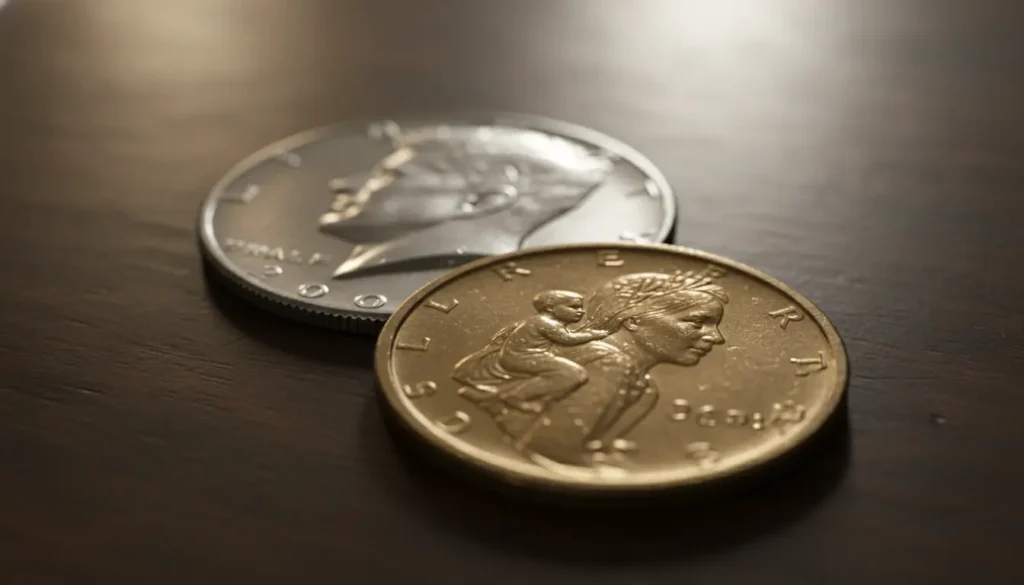
Choosing between a Sacagawea Dollar and a Kennedy Half Dollar depends on your goals: circulation use, collecting, or investing. This guide compares both coins on design, composition, value, and practical uses so you can pick the right coin with confidence.
Sacagawea Dollar vs Kennedy Half Dollar: Quick Overview
The Sacagawea Dollar was introduced in 2000 and is known for its golden color and modern design. It is a dollar coin intended for circulation and commemorative programs.
The Kennedy Half Dollar debuted in 1964 to honor President John F. Kennedy and has seen several metal changes. Older Kennedy halves carry silver content and appeal to both collectors and investors.
Key differences at a glance
- Size and weight: Kennedy half is larger and heavier than the Sacagawea dollar.
- Metal content: Some Kennedy halves (1964, 1965–1970) contain silver; Sacagawea dollars use a copper core with a manganese-brass outer layer.
- Face value vs collectible value: Sacagawea = $1 face; Kennedy = 50¢ face, but collectible/metal value can exceed face value for specific years and conditions.
Design, Size, and Composition
Sacagawea features a portrait of Sacagawea carrying her infant son and a soaring eagle on the reverse in early issues. The coin is 26.5 mm in diameter and weighs about 8.1 grams.
Kennedy half shows President Kennedy on the obverse and the presidential seal on the reverse. The half has a 30.6 mm diameter and is noticeably larger in hand.
Metal content and what it means
Modern Sacagawea dollars have a copper core with a manganese-brass outer layer, giving them a gold tone. They are not silver and generally hold little intrinsic metal value above face.
Kennedy halves produced in 1964 are 90% silver. Those from 1965–1970 are 40% silver. From 1971 onward most are copper-nickel clad. Silver content affects melt value and collector demand.
Sacagawea Dollar vs Kennedy Half Dollar: Collectibility and Value
Collectible value depends on year, mint mark, condition, and rarity. Both coins have collectible series and special issues that attract interest.
- Common Sacagawea dollars are often worth face value unless in uncirculated or proof condition, or are special issues (e.g., certain mint-mark or error coins).
- Early Kennedy halves with silver content can be worth well above face purely for metal value and sometimes more as collector pieces, especially in higher grades.
Check these elements when estimating value: year, mint mark, condition (grading), and any known errors or proof sets.
How to Choose the Right Coin
Choosing the right coin starts with your primary goal: everyday use, a beginner collection, a silver investment, or a commemorative gift. Your decision should weigh aesthetics, metal content, and long-term plans.
Choose Sacagawea Dollar if:
- You want a durable, modern dollar coin for display or circulation.
- You prefer a gold-toned coin with a cultural and historic design.
- Your focus is on collecting a complete series of modern mint issues rather than metal value.
Choose Kennedy Half Dollar if:
- You value larger, classic U.S. coin designs and want options that may include silver.
- You’re interested in coins with intrinsic metal value (1964 and 1965–1970 halves).
- You plan to collect older commemorative or high-grade pieces.
Practical Tips for Buying and Storing
Whether you buy a Sacagawea dollar or a Kennedy half, follow basic buying and storage rules to protect condition and value. Small mistakes can reduce collectible value quickly.
- Buy from reputable dealers, coin shops, or major auction houses when possible.
- Look for grading from PCGS or NGC for high-value coins; raw coins are fine for casual collecting.
- Store coins in a cool, dry place using holders, flips, or airtight capsules to avoid tarnish and handling damage.
Avoid cleaning coins with household cleaners; cleaning often reduces collector value.
Case Study: A Simple Real-World Example
Jane, a new collector, wanted a starter set and a small investment. She chose three Sacagawea dollars from consecutive years for her modern collection and one 1968 Kennedy half in near-uncirculated condition from a local dealer.
The Sacagawea pieces served her goal of completing a series and looking attractive in a display. The 1968 Kennedy half gave her exposure to a classic design and a coin that is more interesting to collectors than a modern clad half, even though it is not silver.
Jane stored all coins in labeled capsules and plans to add a certified 1964 Kennedy half later if she wants silver exposure.
The Sacagawea Dollar was first issued in 2000 to improve dollar coin use. The Kennedy Half Dollar was introduced in 1964 shortly after President Kennedy’s assassination and remains popular among collectors.
Final Checklist: Making Your Decision
Use this short checklist before you buy:
- Decide if you want a coin for face value use, a display series, or metal/investment value.
- Check the year and mint mark for rarity indicators.
- Inspect condition or get a graded example for high-value pieces.
- Store coins properly and avoid cleaning.
Choosing between a Sacagawea Dollar and a Kennedy Half Dollar comes down to purpose. For show and modern series collecting, Sacagawea is attractive and consistent. For classic design or silver exposure, Kennedy halves offer more options. Assess your goals, budget, and interest, and the right choice will become clear.