
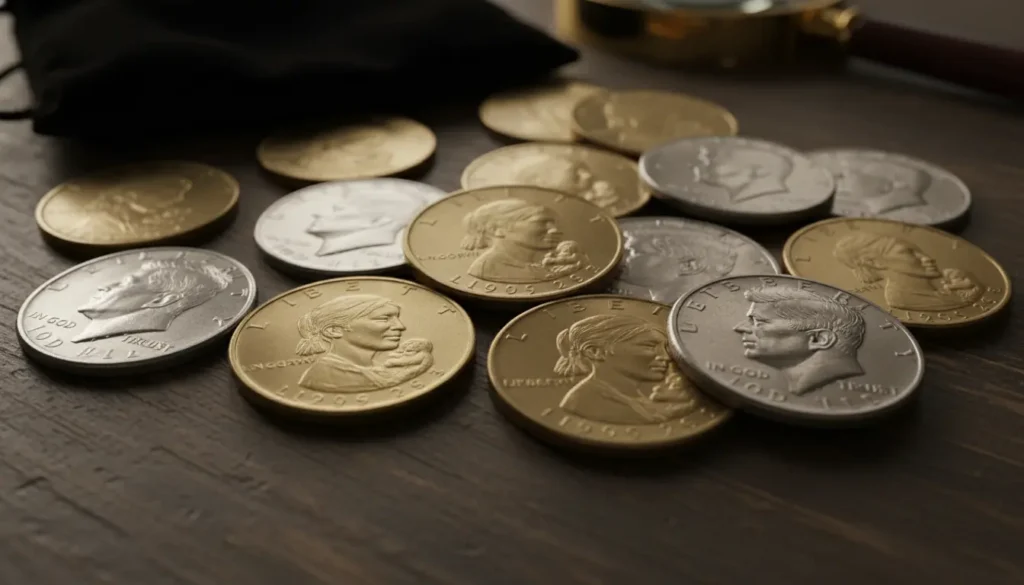
Sacagawea Dollar vs Kennedy Half Dollar: Quick Comparison
Choosing between a Sacagawea dollar and a Kennedy half dollar depends on purpose, budget, and interest in design or history. Both coins are modern U.S. issues, but they serve different uses for casual holders and collectors.
This guide breaks down the main differences and offers a simple method to pick the right coin for your situation.
Design and physical differences
The Sacagawea dollar is a golden-colored, one-dollar coin first issued in 2000. It is made from a manganese-brass clad and is smaller and lighter than the half dollar.
The Kennedy half dollar began in 1964 and is larger and heavier. Modern clad versions (post-1971) are silver-colored and have a heft that many people prefer for display or handling.
Key specs at a glance
- Sacagawea Dollar: Face value $1, diameter 26.5 mm, golden color, modern composition.
- Kennedy Half Dollar: Face value $0.50, diameter 30.6 mm, silver-colored (clad) modern issues; 1964 silver issues are 90% silver.
Value and collectibility: Sacagawea Dollar vs Kennedy Half Dollar
Face value doesn’t equal market value. Collectibility is driven by year, mint mark, condition, and metal content. Some specific dates and proofs carry premiums.
Generally, common modern Sacagawea dollars and Kennedy half dollars have modest collector premiums unless they are special proofs, low-mintage issues, or high-grade examples.
When metal content matters
For investors focused on metal value, older Kennedy half dollars (1964) contain 90% silver and are worth well above face value. Kennedy halves from 1965–1970 contain 40% silver and also track silver prices.
Sacagawea dollars do not contain precious metals and are valued primarily as modern collectible coins rather than bullion.
Practical uses: Spending, collecting, gifts
Consider what you want the coin for. Is it everyday pocket change, a display piece, a gift, or a long-term collectible? Your choice should match that purpose.
Use-case checklist
- Spending: Sacagawea dollar is closer to everyday currency value; it is less likely to be removed from circulation by collectors.
- Display or handling: Kennedy half dollar is larger and feels more substantial for displays or coin trays.
- Investment or silver content: Seek 1964 or 1965–1970 Kennedy halves for silver exposure.
- Gifts or symbolic value: Sacagawea appeals for its Native American imagery and modern feel; Kennedy connects to American presidential history.
How to choose the right coin: Step-by-step
Use these steps to decide between a Sacagawea dollar and a Kennedy half dollar. This method helps balance aesthetics, budget, and long-term goals.
1. Define your goal
Decide if the coin is for spending, collecting, display, or investing. Clear goals narrow suitable options quickly.
2. Set a budget
Modern common coins are inexpensive; proof or high-grade examples cost more. For silver exposure, budget for the metal premium on older Kennedy halves.
3. Check condition and rarity
Look for uncirculated grades or proof sets when buying for collecting. For circulation or casual display, circulated examples work fine and cost less.
4. Buy from reliable sources
Use reputable dealers, auctions with buyer protection, or certified coin sellers. Ask for grade certification if price or grade matters to you.
Examples and small case study
Example 1: A parent wants a simple first coin gift for a child. They choose a Sacagawea dollar for its $1 face value, durable golden color, and cultural story. It’s inexpensive and easy to replace.
Example 2: A collector wants a tactile display piece. They choose a modern Kennedy half dollar in near-uncirculated condition for its size and visual impact.
Case study: Hobbyist choosing a starter coin
Maria wanted to start coin collecting with a limited budget of $50. She prioritized condition and a meaningful story. She bought three Kennedy half dollars from 1968 in high circulated condition and a 2000 Sacagawea proof for variety.
Outcome: Maria had a mix of history (Kennedy halves) and modern design (Sacagawea). The Kennedy halves offered potential silver value if she upgraded to earlier dates later.
Common mistakes to avoid
- Assuming face value equals market value — collectibility and metal content change price.
- Buying without verification — uncertified high-price coins can be misrepresented.
- Overpaying for common dates — research mintage numbers and recent sale prices first.
Quick decision guide
If you want low-cost, symbolic modern currency for gifts or casual collecting, choose a Sacagawea dollar. If you want a larger display piece or silver exposure, choose a Kennedy half dollar from silver years or seek higher-grade modern examples.
Final checklist before purchase
- Confirm purpose: spend, collect, gift, or invest.
- Verify date and metal content for Kennedy halves (1964 = 90% silver; 1965–1970 = 40% silver).
- Inspect condition or request certification for premium coins.
- Buy from a reputable dealer and compare prices.
With these steps, you can confidently choose between the Sacagawea dollar and the Kennedy half dollar based on practical needs and budget rather than just appearance.