
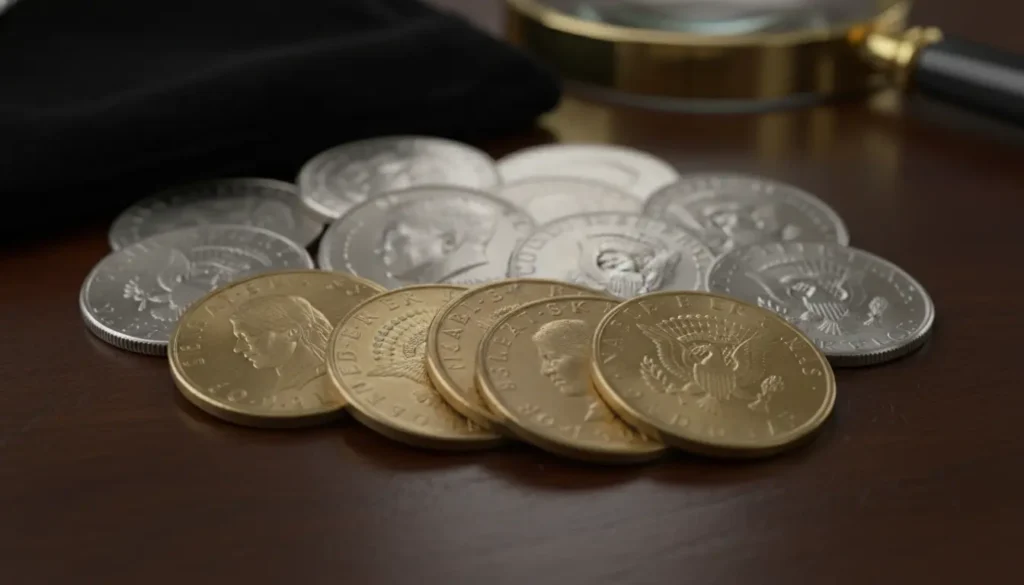
Choosing between a Sacagawea Dollar and a Kennedy Half Dollar depends on why you want the coin. Are you buying to spend, collect, or invest? This guide compares the two coins and gives a practical checklist to help you decide.
Sacagawea Dollar vs Kennedy Half Dollar: Quick Comparison
The Sacagawea Dollar and the Kennedy Half Dollar serve different roles. One is a modern dollar coin often used for novelty or circulation. The other is a half-dollar with historical and silver-era appeal.
Sacagawea Dollar: What to know
Introduced in 2000, the Sacagawea Dollar is a golden-colored dollar coin featuring Sacagawea and her child. It is a manganese-brass clad coin with a copper core designed for regular use and collecting.
Most Sacagawea coins are common in circulated condition and carry a face value of one dollar. Collectors look for proof strikes, mint errors, and special releases for higher value.
Kennedy Half Dollar: What to know
The Kennedy Half Dollar debuted in 1964 after President John F. Kennedy’s assassination. Early issues contain silver and later issues are copper-nickel clad.
Key facts: 1964 halves are 90% silver, 1965–1970 halves are 40% silver, and 1971 onward are copper-nickel clad. Silver content affects intrinsic metal value and collector interest.
Value Factors: Sacagawea Dollar vs Kennedy Half Dollar
Understanding value helps you choose. Value is driven by metal content, rarity, condition, and demand.
- Metal content: Kennedy halves from 1964 and 1965–1970 have silver content that can drive price above face value.
- Mintages and rarity: Low mintage years or mint errors raise collector value for both coin types.
- Condition and grading: Uncirculated or professionally graded coins command premiums.
Liquidity and resale
Sacagawea Dollars are easy to trade at face value but usually command little collector premium unless rare. Kennedy Halves, especially silver ones, are liquid too but their resale price fluctuates with silver.
How to Choose the Right Coin: Practical Steps
Use a simple decision checklist to match the coin to your goal. Below are practical steps to guide your choice.
- Define your purpose: spending, collecting for aesthetics, or investing in metal.
- Set a budget: Decide how much you want to spend initially and for long-term holdings.
- Research condition: Learn how grade affects value and whether you want circulated or certified coins.
- Check metal content: If you want intrinsic value, prioritize silver Kennedy halves from 1964–1970.
- Consider rarity and interest: Look for limited mintages, special issues, or error coins.
Quick decision guide
- Choose Sacagawea Dollar if you want a lightweight collectible, a modern dollar for everyday carrying, or a low-cost addition to a collection.
- Choose Kennedy Half Dollar if you want historical appeal, potential silver value (for 1964–1970), or iconic U.S. coinage for display.
Examples and Practical Scenarios
Here are short examples to show how the choice works in real life.
- If you want a pocket-sized coin for novelty or education, pick a Sacagawea Dollar. It is eye-catching and durable.
- If you want silver exposure or a historical display piece, pick a Kennedy Half Dollar from 1964 or 1965–1970. These contain silver and often appeal to collectors.
The first Kennedy Half Dollar was minted in 1964 as a tribute to President Kennedy and quickly became popular. That 1964 issue contains 90% silver, making it more valuable than face value to metal buyers.
Case Study: Choosing for a Small Collection
Maria wanted to start a small U.S. coin collection with a $50 budget. She had to pick which coins to buy first and chose a mixed approach.
She bought ten Sacagawea Dollars at face value to show modern design and two circulated Kennedy Half Dollars from 1976 for historical interest. Maria then saved to buy one 1964 Kennedy Half Dollar when she found a deal at a local coin shop. The mix gave her variety, historical context, and a silver piece to learn about grading and resale.
Outcome: Within a year Maria felt confident expanding into proof coins and learning to read mint marks and year-to-year value changes.
Practical Tips for Buying
Follow these tips when shopping online or at coin shops to avoid common mistakes.
- Always verify seller reputation and return policy.
- Ask for clear photos of the coin’s obverse, reverse, and edge before buying.
- Compare prices across multiple sellers to understand market range.
- For silver Kennedy halves, check spot silver price to estimate metal value.
- Consider paying for professional grading only if the coin is already in excellent condition and the price justifies grading costs.
Summary: Which Coin Is Right for You?
The right coin depends on your goal. Choose Sacagawea Dollars for modern motifs, everyday novelty, and low entry cost. Choose Kennedy Half Dollars for history, potential silver content, and stronger collector appeal for specific years.
Use the checklist above, inspect condition, and buy from reputable sources. With clear goals and a modest budget you can build a satisfying collection or choose coins that fit your needs.