
Sacagawea Dollar Vs Kennedy Half Dollar: A Practical Comparison
This guide compares the Sacagawea Dollar vs Kennedy Half Dollar so you can choose the right coin for collecting, display, or investment. You will get clear differences in size, metal content, rarity, and typical value.
Why choose one over the other?
Choice depends on goals. If you want lightweight modern coins for everyday display, the Sacagawea dollar is appealing. If you prefer larger coins with historic designs and possible silver content, the Kennedy half dollar may be better.
Design, Size, and Composition
Sacagawea Dollar vs Kennedy Half Dollar design features
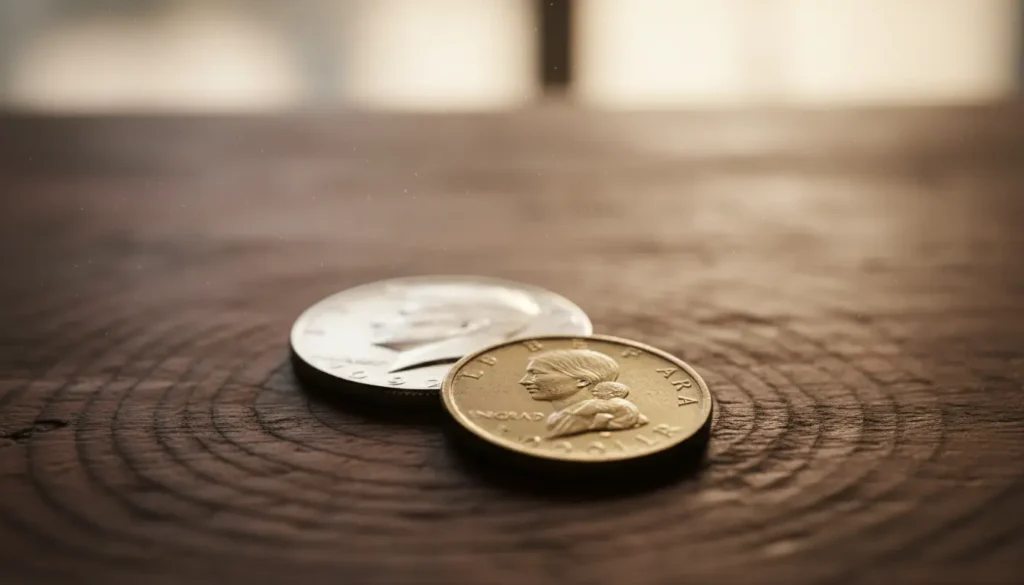
The Sacagawea Dollar was introduced in 2000. It features Sacagawea carrying her child on the obverse and changing reverse designs in later series. The coin is golden in color and small in diameter.
The Kennedy Half Dollar debuted in 1964. It bears President Kennedy’s profile and several reverse designs across decades. The half is noticeably larger and heavier than the dollar coin despite its name.
Metal composition and what it means
- Sacagawea Dollar: manganese-brass clad over a pure copper core (not silver). It is durable and resists tarnish.
- Kennedy Half Dollar: 1964 coins are 90% silver. From 1965–1970 they are 40% silver in a clad composition. Post-1970 circulating halves are copper-nickel clad (no silver).
Metal composition directly affects intrinsic value. Silver halves from 1964 and 1965–1970 often trade at a premium over face value because of silver content.
Value Considerations: Bullion vs Collector Value
Decide whether you prioritize metal value or collector value. The Sacagawea dollar carries low intrinsic metal value and low bullion appeal. The Kennedy half dollar can have bullion both as silver content and as collectible pieces.
Common value drivers
- Silver content: Kennedy halves from 1964 and 1965–1970 are sought after for silver value.
- Mint state grade: Higher grades command collector premiums for both coins.
- Rarity and errors: Specific mint years, low-mintage issues, and mint errors can raise value.
Collector Types and Which Coin Fits Them
Match the coin to collector intent. Here are four common profiles and matching recommendations.
- Beginner collector: Sacagawea dollar — affordable and attractive for date runs.
- Historical collector: Kennedy half dollar — ties to 1960s politics and design history.
- Precious metals buyer: Silver Kennedy halves (1964 or 1965–1970) for bullion exposure.
- Investor in graded coins: Both coins can be valuable when high-grade or rare varieties are found.
Practical Buying Tips
Follow a checklist when buying either coin so you spend wisely and avoid common pitfalls.
- Confirm year and mint mark. These determine metal content and rarity for Kennedy halves.
- Check condition. Look for wear, scratches, and cleaning; cleaned coins lose value.
- Verify authenticity. Buy from reputable dealers or use third-party grading for high-value pieces.
- Compare price per silver ounce for silver halves against spot silver price.
Storage, Display, and Handling
Storage is easy for both coins but differs by value. Sacagawea dollars are durable and can be stored loose or in tubes.
Silver Kennedy halves need careful storage to avoid tarnish. Use acid-free holders and silica gel for long-term preservation.
Small Case Study: Choosing Between Two Coins
Maria is a new collector with a $150 budget. She wants something pretty for display and some long-term value. At a local coin shop she sees two offers: 100 Sacagawea dollars in rolls for $120, or a single 1964 Kennedy half graded XF for $140.
She considers her goals: display flexibility versus collectible story and silver content. Maria chooses the 1964 Kennedy half because it offers historical appeal and intrinsic silver value, leaving $10 to save toward future purchases.
This real-world choice shows how budget and priorities determine the right coin.
Common Questions About Sacagawea Dollar Vs Kennedy Half Dollar
Which is better for beginners?
Sacagawea dollars are better for beginners who want quantity and low-cost date runs. They are easy to handle and collect by year or reverse design.
Which is better for value retention?
Silver Kennedy halves can retain value better because of silver content. High-grade or rare Kennedy halves also tend to appreciate with collector demand.
Quick Comparison Summary
- Size: Kennedy half is larger; Sacagawea dollar is smaller and lighter.
- Metal: Sacagawea is brass-clad; Kennedy halves may be silver (older) or copper-nickel (newer).
- Use case: Sacagawea for casual collecting; Kennedy half for silver exposure and history.
The Sacagawea dollar was released in 2000 to replace the Susan B. Anthony dollar. The Kennedy half dollar was first minted in 1964 as a tribute to President John F. Kennedy after his assassination in 1963.
Final Decision Checklist
- Goal: Display, collecting, or silver investment?
- Budget: Smaller budgets favor Sacagawea; silver premiums affect Kennedy halves.
- Condition and provenance: Seek graded coins for high-value purchases.
- Long-term plan: Keep silver halves for bullion value or collect Sacagawea series for completion.
Use this guide to weigh Sacagawea Dollar vs Kennedy Half Dollar. Your final choice should reflect your collecting goals, budget, and interest in metal content or historical value.