
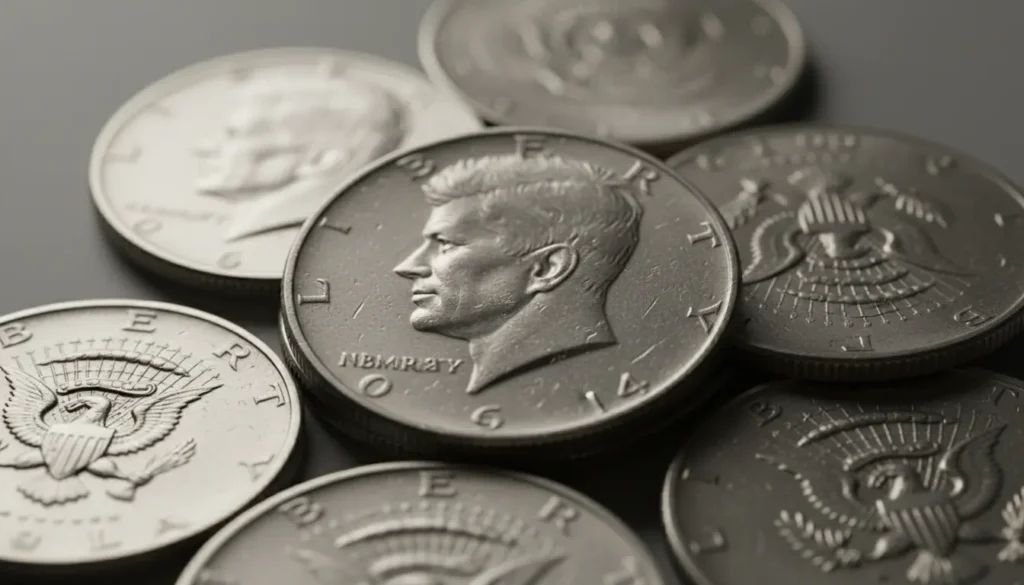
Hidden Errors in Kennedy Half Dollars That Skyrocket Their Value
Kennedy half dollars are common in many collections, but hidden minting errors can turn a typical coin into a valuable rarity. This guide explains the types of hidden errors that increase value, how to spot them, and what to do if you find one.
Why hidden errors in Kennedy Half Dollars matter
Error coins are attractive because they are often unique and scarce. Even small variations created during striking or planchet preparation can make a coin collectible.
Collectors and dealers pay premiums when an error is clear, well-preserved, and authenticated by a grading service. Understanding which errors are genuinely rare helps you prioritize what to keep and what to submit for grading.
Common hidden errors in Kennedy Half Dollars
Not every imperfection is valuable, but some types reliably raise interest and price. Here are the most important hidden errors to know.
1. Doubled Die
Doubled die errors occur when hub impressions shift during die creation, producing doubled details on the obverse or reverse. Look for doubling on hair, lettering, and date digits.
2. Repunched or Doubled Mint Marks (RPM/DM)
Repunched mint marks show traces of previous punches beneath the visible mint mark. These are often subtle and require magnification to detect, but collectors prize distinct repunching patterns.
3. Die Cracks and Cuds
Die cracks show as raised lines on the coin surface where the die fractured. Small cracks are common, but large, dramatic cuds (where part of the die is missing) can be highly desirable.
4. Off-Center Strikes and Broadstrikes
Off-center strikes show part of the coin’s design missing; the more dramatic the offset, the higher its interest. Broadstrikes and struck-through errors (objects between die and planchet) also command attention.
5. Clipped Planchets and Lamination Errors
Clipped planchets have a curved missing edge from blanking operations. Lamination errors occur when the metal layers separate, producing flakes or missing metal. Both are visually obvious yet sometimes overlooked in pocket change.
How to inspect Kennedy Half Dollars for hidden errors
Inspection is simple when you know what tools and steps to use. A systematic approach filters out common non-valuable flaws.
- Use a 10x loupe or a low-power microscope for detail work.
- Examine under angled light to reveal die cracks, doubling, and repunched mint marks.
- Compare suspect coins to photos of known varieties and standard reference images.
- Weigh and measure to detect clipped planchets or altered coins.
Practical checklist when you find a suspect coin
- Photograph the obverse, reverse, and edge with consistent lighting.
- Note mint mark and full date details; those affect rarity.
- Compare to online auction records and error databases.
- Consider third-party grading (PCGS, NGC) for high-value pieces.
Some Kennedy half dollars with subtle doubled dies or repunched mint marks were produced in very small runs, making them worth many times the face value when confirmed by a grading service.
Authentication and grading for hidden errors in Kennedy Half Dollars
Authentication separates valuable error coins from modern alterations or damage. Submit promising finds to an established grading service for a professional opinion and encapsulation.
Services will assign a grade and note the error type. Provenance and clear photography can increase buyer confidence when you later sell or consign the piece.
Selling and valuing error Kennedy Half Dollars
Once authenticated, you have options: auction houses, specialist error-coin dealers, and online marketplaces. Each channel has trade-offs in fees, speed, and buyer reach.
Key value drivers include rarity, eye appeal, grade, and market demand. Small, common errors might be collectible but not highly valuable, while clear, dramatic errors can attract serious bidders.
Case study: A real-world discovery
A collector found a Kennedy half in a mixed lot that looked slightly off at the edge. Under magnification they spotted an unusual die crack and a faint repunched mint mark on the reverse.
After photographing the coin and comparing it to reference guides, they sent the coin to a grading service. The coin was authenticated, slabbed, and later sold through an online auction to a specialist, demonstrating how a careful inspection turned a routine purchase into a collectible sale.
Tips to build an error-coin eye
- Handle coins by the edges and store them in non-PVC holders.
- Study established error guides and auction archives regularly.
- Join numismatic forums and local clubs to see examples and ask experienced members for opinions.
- Record and photograph finds; consistent documentation helps when selling.
Final practical checklist
- Look for doubling on hair, date, and lettering.
- Check mint marks for repunching and signs of overworking.
- Inspect edges and weight for clipped planchets and lamination issues.
- Use grading services for coins you believe have strong error credentials.
Hidden errors in Kennedy Half Dollars can add significant value, but only when they are genuine and well-documented. With a few tools, a careful eye, and good documentation you can spot, authenticate, and monetize these hidden gems.