
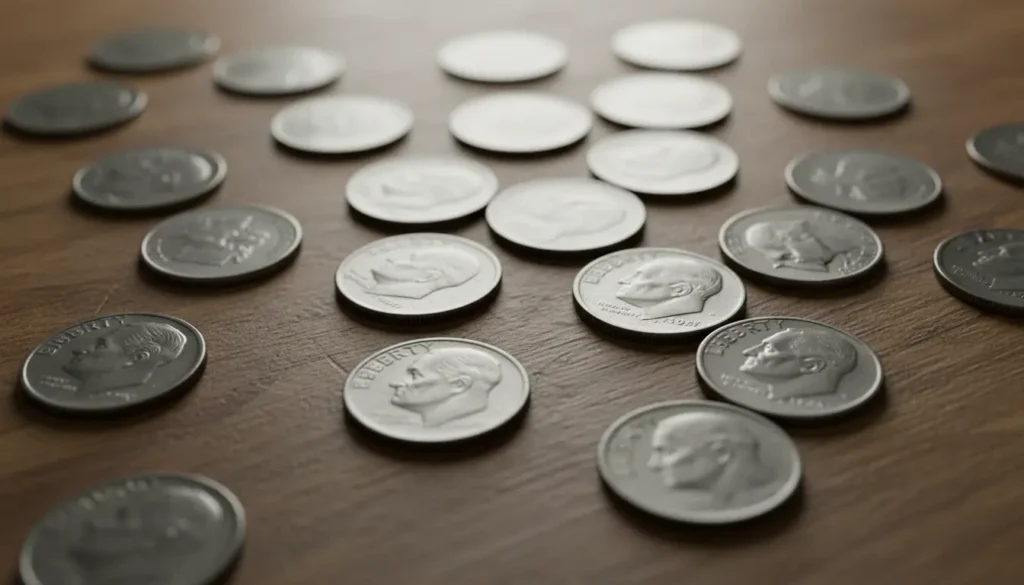
Many collectors and casual savers pass ordinary coins without a second thought. Yet some dimes and quarters in circulation or old collections can be worth far more than face value. This guide explains what to look for and how to confirm a potentially valuable coin.
How Rare Dimes and Quarters Become Valuable
Coins increase in value for a few common reasons: low original mintage, surviving population in high grade, major minting errors, or historically important dates and varieties. A dime or quarter from an early year or with a clear error can command high prices at auction.
Value depends on grade (condition), rarity, and demand. Even the same date and mint mark can range from pocket change to six or seven figures depending on those factors.
How to Check Your Change for Rare Dimes and Quarters
Follow a simple routine when you find an old or unusual coin. Use basic tools and compare against reliable references before jumping to conclusions.
- Inspect the date and mint mark with a loupe (10x magnification recommended).
- Look for mint errors: doubled die, off-center strike, clipped planchet, or repunched mint marks.
- Compare size, weight, and edge reeding to standard specifications to detect compositional differences.
- Take clear photos (obverse and reverse) and note any unusual toning or damage.
Which Dimes to Watch
Certain dime types and dates are routinely sought by collectors. Watch for these categories and dates when checking dimes:
- Early silver dimes: Draped Bust and Seated Liberty dimes (pre-1890s) are rare in high grade.
- 1894-S Barber Dime: One of the most famous rare dimes with very low mintage.
- Mercury dimes (1916–1945): Look for key dates and mint marks like 1916-D.
- Error dimes: off-center strikes, double dies, and clipped planchets can add significant value.
Which Quarters to Watch
Quarters also include several high-value types and well-known rarities. Key examples to check are:
- Draped Bust and Capped Bust quarters (late 1700s–1830s) — extremely rare in any grade.
- Washington quarters: 1932-D and 1932-S are scarce in high grades and sought after.
- Standing Liberty quarters (1916–1930): early dates and varieties can be valuable.
- Error quarters: double die obverse/reverse, broadstrike, and off-center strikes are of interest.
Identifying Common Error Types
Error coins often attract collectors because they are visually distinctive and scarce. Learn the main error types so you can quickly recognize them.
- Doubled Die: Design elements appear doubled — often very visible on portraits or dates.
- Off-Center Strike: The design is shifted, leaving a blank area on one side of the coin.
- Clipped Planchet: A crescent-shaped blank edge where the planchet was improperly cut.
- Die Breaks and Cuds: Raised rough areas where the die has cracked or broken.
Authentication and Selling
If you believe you have a rare or valuable dime or quarter, don’t clean or alter it. Cleaning can destroy value and make authentication difficult. Instead, document the coin and seek professional grading.
Submit to a reputable third-party grading service (PCGS, NGC, ANACS) for certification. Once graded, you can sell through major auction houses, reputable dealers, or certified online marketplaces.
Quick Checklist Before You Sell
- Photograph the coin (high-resolution obverse and reverse).
- Note weight and diameter for comparison to official specs.
- Check population reports — how many are known in high grade?
- Get a professional opinion if the coin seems rare or error-prone.
One famous dime, the 1894-S Barber dime, is so rare that a few specimens have sold for nearly two million dollars at auction. Always check small silver dimes in old collections.
Resources for Further Research
Use trusted references and communities to verify a coin’s rarity and value. Some useful resources include:
- The Official Red Book (A Guide Book of United States Coins)
- PCGS and NGC population and price guides
- Major auction sites: Heritage, Stack’s Bowers, and similar houses
- Collector forums and local coin clubs for second opinions
Case Study: A Small Estate Find
A homeowner sorting an inherited jewelry box found a small bag of loose coins. One silver dime had an unusual mint mark and strong lustre. After photographing and comparing it to online references, they took it to a local dealer who recommended submission to a third-party grader.
The coin turned out to be a scarce early 20th-century variety. Grading authenticated the rarity and the homeowner consigned the coin to auction, where it sold for a price well above face value. The sale covered estate expenses and provided a reminder that small finds can matter.
Final Practical Tips
Keep a loupe and small scale in a desk or glovebox. When you find an odd coin, slow down and document it. Many valuable coins are discovered in change, sock drawers, and old boxes.
When in doubt, consult a professional. Authentication protects both buyers and sellers and helps you get the best result if you decide to sell.
Check your change regularly — a single coin could be the start of a valuable discovery.